
New Museum Architectures: Palatial Politics or Performative Pedagogies?
Dual Masters in Museum Studies, University of Amsterdam (2020)
This thesis tracked the trend of large-scale permanent collection renovations occurring across the museum field. I analyzed museums’ architectural impact on the visitor experience using museological theories which survey the sociopolitical history of the museum and learning theories which champion constructivist educational models. Case studies included the Stedelijk Museum Amsterdam’s 2012 renovation by Benthem Crouwel Architects, Stedelijk BASE by AMO Architects and Tata Steel Nederland and the Africa Museum’s 2018 renovation by Stéphane Beel Architects.
"The narratives built through design and architecture contain messages which intentionally and unintentionally influence society on a political and epistemological level. Museums’ design encourages specific forms of narrative, visitation, experience, and knowledge production. However, the underlying role of architecture is often absent from these debates as museum studies has cultivated a focus on the examination of specific exhibitions or modes of display. Narrative, ritual, interpretation, and experience all converge with the form, aesthetics and spatial arrangement of museums. This thesis will look at recent museum extensions to assess their pedagogical impact. How are contemporary renovations to museum architectures influencing the stories told by museums?"
This thesis analyzed recent museum extensions to assess their pedagogical impact. How are contemporary renovations to museum architectures influencing the stories told by museums? As the title of the thesis asks; are new museum architectures simply palatial extensions or do they enable new performative pedagogies? To answer these questions, this thesis examined an interpretively rich point of connection: where new architectures meet permanent collections. To understand how the architecture works on an ideological level, museological theory surveying the sociopolitical history of the museum was paired with learning theory outlining progressive educational models. The constructivist concept of scaffolding was applied in relation to pedagogies of the traditional museum to facilitate an investigation of the visitor experience encapsulating sociopolitical histories of the museum. The case studies selected claim their renewals offer new ways of being for the institution and its visitors. Therefore, they present promising opportunities to answer this question. Both the Stedelijk Museum’s and Africa Museum’s architectural extensions included purpose-built re-presentations of permanent collection exhibitions co- created with museum professionals and architects. This thesis aims to contribute a broader understanding of how the current synthesis of these separate domains of expertise is supporting visitors’ experience when they come to the museum.
Rhizomes and Multicursal Mazes: Fostering Engagement with Digital Cultural Heritage Collections
I am currently contributing to the European Union Horizon project DIGHT-Net, which focuses on sustainable, usable, and visible digital cultural heritage. For this project, I developed and organized a three-day international workshop for heritage scholars and professionals on emerging trends in heritage and archival studies. As part of the program, I delivered the talk Rhizomes and Multicursal Mazes: Fostering Engagement with Digital Cultural Heritage Collections, drawing on research from my master’s thesis New Museum Architectures: Palatial Politics or Performative Pedagogies? and expanding its core concepts into a new context aligned with the conference theme. By integrating contemporary digital case studies, the talk bridged academic theory and practical application, offering new actionable insights for heritage professionals.
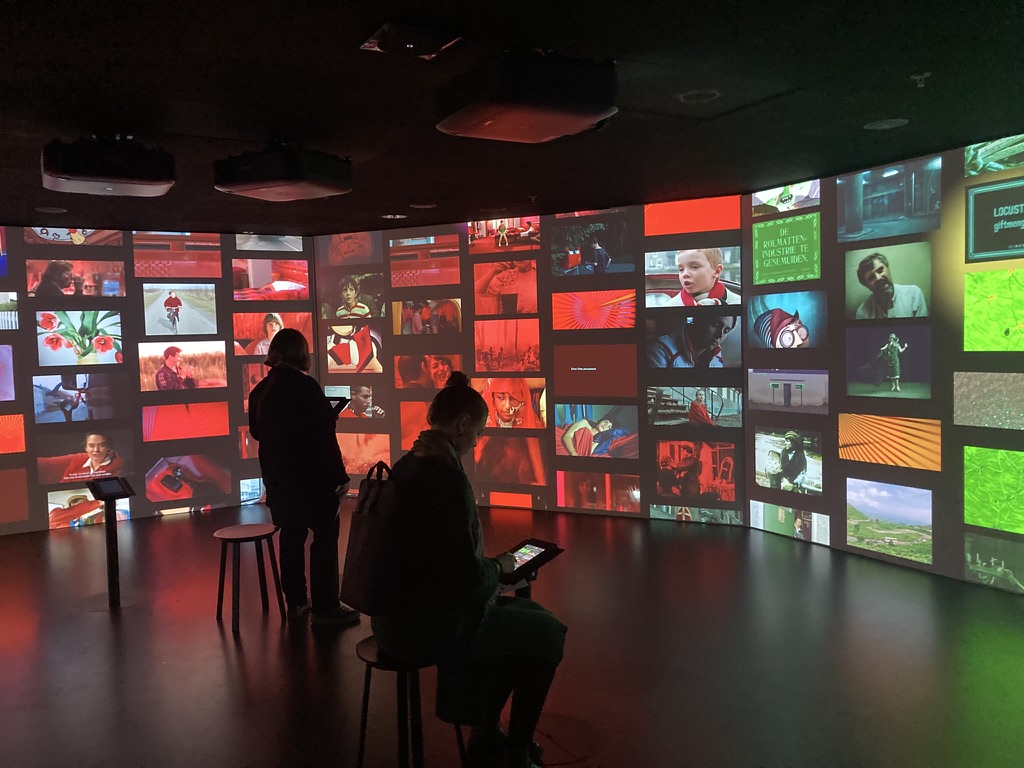
Abstract
This presentation examines the curator as a narrative agent and historical collections as narrative scripts, exploring how meaning emerges through the interplay of interpretation, physical design, and participation. Drawing on perspectives from cultural theory, material culture studies, museum education and free-choice learning, and museum exhibition design, it frames a shift toward multicursal, non-linear frameworks rooted in constructivist learning. Using the metaphor of bamboo’s rhizomatic growth, it shows how these approaches can reshape the organization, presentation, and reception of collections. Case studies including Stedelijk BASE, Below the Surface, Oculi Mundi, and eCloud WWI reveal how such models foster personal meaning-making, deepen engagement, and connect complex layers of knowledge—ultimately reimagining how audiences interact with heritage collections.